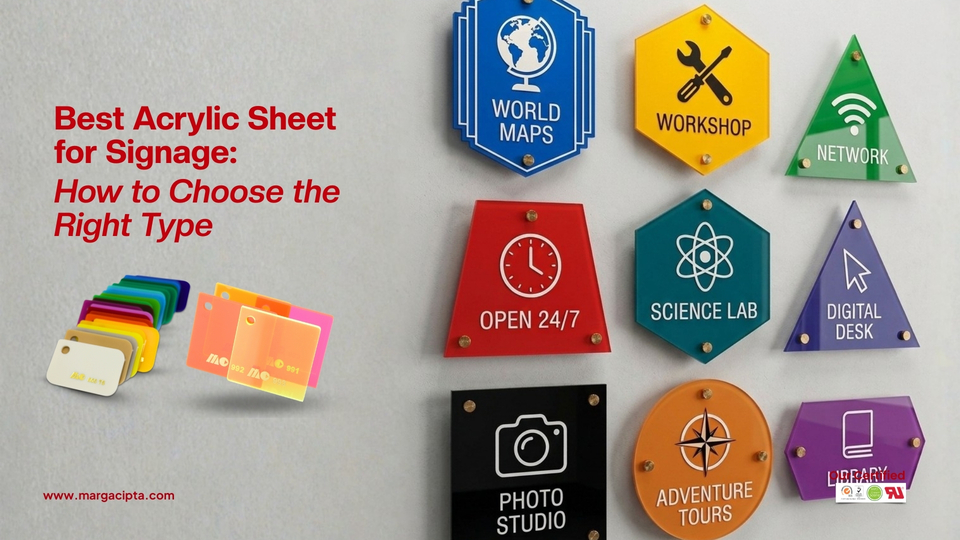
Best Acrylic Sheet for Signage: Types, Thickness & Tips

Informational

The best acrylic sheet for signage depends on clarity, durability, thickness, and fabrication needs.

For most signage applications, clear or colored cast acrylic sheets are preferred because they offer excellent optical clarity, durability, and machining performance.

Acrylic signage is widely used because it provides a modern, glass-like appearance while being lighter and more durable.

Types of Acrylic Sheets for Signage

Different acrylic sheet types are designed for different applications.

Cast Acrylic

Cast acrylic is considered the premium choice for signage.

Advantages:

  • Superior optical clarity
  • Better chemical resistance
  • Excellent for laser cutting and engraving

Best for:

  • Premium signage
  • LED light panels
  • Decorative displays

Extruded Acrylic

Extruded acrylic is produced through a continuous manufacturing process.

It is usually more affordable, but for long-term projects or premium signage, extruded acrylic may require earlier replacement or maintenance compared to higher-grade acrylic materials.

Best for:

  • Budget signage
  • Simple display panels
  • Short-term or temporary installations

Read also: How to Identify High-Quality Cast Acrylic Sheets

Recommended Acrylic Thickness for Signage

The ideal thickness depends on the size and installation method.

Sign Type

Recommended Thickness

Small indoor signage

2–3 mm

Wall signage

3–5 mm

Outdoor signage

5–8 mm

Large signage panels

8–10 mm

Thicker acrylic provides better rigidity and durability for larger signs.

Why Acrylic Is Popular for Signage

Acrylic sheets are widely used in the signage industry because they offer several benefits.

High Clarity

Acrylic provides a glass-like finish that enhances the appearance of logos and graphics.

Easy Fabrication

Acrylic can be:

  • Laser cut
  • CNC engraved
  • UV printed
  • Heat bent

This makes it ideal for creative signage designs.

Lightweight and Durable

Compared to glass, acrylic is lighter and easier to install while still offering good durability.

Read also: Clear Acrylic Sheet vs Glass: Pros, Cons & Key Differences

Choosing a Reliable Acrylic Manufacturer

For consistent quality and precise dimensions, it is important to source acrylic sheets from a reliable manufacturer such as
PT. Margacipta Wirasentosa.

Quality acrylic sheets provide:

  • Stable thickness
  • High optical clarity
  • Reliable durability for signage applications.

FAQ: Acrylic Sheet for Signage

What type of acrylic is best for signage?

Cast acrylic is generally considered the best option for premium signage.

What thickness acrylic should be used for signage?

Most signage uses acrylic between 3 mm and 8 mm depending on size.

Can acrylic signs be used outdoors?

Yes, high-quality acrylic sheets are suitable for outdoor signage.

Is acrylic better than glass for signage?

Acrylic is usually preferred because it is lighter, safer, and easier to fabricate.

Choose the Right Acrylic Sheet for Your Signage Project

Using the right acrylic sheet can significantly improve the durability, appearance, and overall quality of your signage.

PT. Margacipta Wirasentosa offers a range of acrylic sheets designed for signage applications, including clear and colored panels with consistent thickness and excellent surface quality.

  • Ideal for LED signage and light boxes
  • Suitable for laser cutting and engraving
  • Available in multiple thickness options
  • Reliable clarity and durability for indoor and outdoor signage

Get in touch with our team at info@margacipta.com to find the best acrylic sheet solution for your signage needs.

News Release

Acrylic Ideas for Home Decor You'll Love

Beyond the usual tables and chairs, there are unique acrylic ideas for home decor you’ve never thought of, and they might just inspire your next project.

Looking for a way to refresh your home with a modern touch? Acrylic is a versatile material that blends durability with style, making it a perfect choice for interior design. 

Check some acrylic ideas that you might want to create. 

1. Acrylic Floating Shelves

Clear acrylic shelves create a sleek, minimalist look while making your walls appear more spacious. They’re perfect for displaying books, plants, or collectibles without adding visual clutter.

Read also: Things to Check Before Buying Acrylic

2. Acrylic Coffee Table with a Twist

Try a round or geometric-shaped acrylic coffee table to give your living room a modern, airy vibe. The transparency makes even small spaces feel larger.

3. Wall Art with Acrylic Panels

Acrylic sheets can be transformed into colorful, layered wall art. Add paint, prints, or engravings to create a bold statement piece that instantly upgrades your room.

4. Acrylic Frames for a Gallery Wall

Unlike traditional wooden frames, acrylic photo frames offer a contemporary edge. Use them to create a gallery wall that feels light, modern, and easy to update over time.

5. Acrylic Lamp Stands and Lighting

Acrylic is perfect for diffusing light softly, making it ideal for lamp bases or creative lighting fixtures. It adds a stylish glow to bedrooms, living rooms, or even workspaces.

Read also: Does Acrylic Shatter? Find Out Its Strength and Durability

6. DIY Acrylic Accessories

From key holders to desk organizers, acrylic can be cut and shaped into practical yet decorative accessories. These little touches add functionality while keeping the aesthetic chic.

7. Acrylic Plant Stands

Combine greenery with modern design by using acrylic plant stands. The transparent look highlights your plants while giving the illusion of floating pots.

Acrylic is more than just a modern material, it’s a design tool that can transform your home.

From shelves and furniture to wall art and accessories, these acrylic ideas for home decor will bring a fresh, stylish, and unique vibe to your space.

PT Margacipta Wirasentosa offers high-quality cast acrylic made from 100% virgin MMA, with NSF-certified options for food contact applications.

Acrylic Sheet for Interior Design: Modern Applications for 2026 | Marga Cipta

As we enter 2026, interior design trends continue to shift toward modern, minimalist concepts that emphasize durability, aesthetics, and efficiency.

One material that stands out in this movement is the acrylic sheet for interior design. With its clarity, versatility, and durability, acrylic has become a preferred choice among interior designers, architects, and business owners.

Marga Cipta, as the producer of MC® Cast Acrylic Sheet, offers high-quality acrylic solutions perfectly suited for residential, retail, hospitality, and large commercial projects.

Find out more about the reason acrylic will be the best solution for interior design and architecture.

1. Exceptional Clarity for Modern and Open Spaces

One of the strongest benefits of acrylic sheet is its exceptional optical clarity, which closely resembles glass but with superior durability and lighter weight.

In 2026, when open-concept spaces and natural lighting continue to dominate, acrylic becomes an ideal material for:

  • Transparent room dividers
  • Decorative wall panels
  • Minimalist shelving
  • Lighting covers and diffusers

These applications help create interiors that feel spacious, modern, and visually clean. Perfect for homes, studios, and showrooms.

Read also: Acrylic Application for Accessories: Stylish, Durable, and Versatile

2. Wide Color and Finishing Options for Creative Accents

Unlike traditional glass, MC® Acrylic Sheet is available in a wide range of colors, transparencies, textures, and finishes. This opens endless design possibilities for aesthetic interior features such as:

  • Colored wall panels
  • Reception backdrops
  • Retail product displays
  • Glossy, modern furniture

Acrylic is also highly workable. It can be heated, molded, and shaped into curves or custom forms, making it ideal for bold statement pieces and artistic installations.

3. High Durability for Commercial Environments

Commercial interiors require materials that are long-lasting, impact-resistant, and easy to maintain. Key durability advantages include:

  • Stronger impact resistance compared to glass
  • Does not shatter into dangerous pieces
  • Resistant to yellowing
  • Smooth surfaces that are easy to clean

These benefits make acrylic suitable for high-traffic environments such as retail stores, hotels, clinics, and public spaces.

Read also: Acrylic Usage Trends 2026: New Applications in Design and Industry

4. Cost-Efficient Option for Premium Aesthetic

Acrylic provides a premium, modern look at a more affordable cost than materials like tempered glass, marble, or metal. Many businesses, especially retail and SMEs, use acrylic sheet for:

  • Signage and brand displays
  • Product showcases
  • POP (Point of Purchase) displays
  • Decorative lighting elements

With its balance of aesthetics and durability, acrylic becomes a long-term investment for enhancing interior visuals.

5. Interior Design Trends Using Acrylic Sheet in 2026

Several acrylic-based design trends are expected to rise in popularity throughout 2026:

  • Modular acrylic furniture that is lightweight yet stylish
  • Acrylic LED panels for futuristic ambient lighting
  • Acrylic kitchen backsplashes that are sleek and easy to clean
  • Sustainable acrylic decor supporting eco-friendly design concepts

These trends reflect the increasing demand for efficient, modern, and sustainable materials.

Conclusion

With its clarity, versatility, and durability, it is no surprise that acrylic sheet for interior design continues to be a leading material in 2026.

MC® Cast Acrylic Sheet offers reliable quality that supports a wide range of interior projects, from homes to commercial buildings.

Whether you are designing a modern living space, a retail environment, or a commercial facility, acrylic sheets provide a stylish and efficient solution for today’s design needs.

Want to order? E-mail us at info@margacipta.com and get more information about our acrylic products.

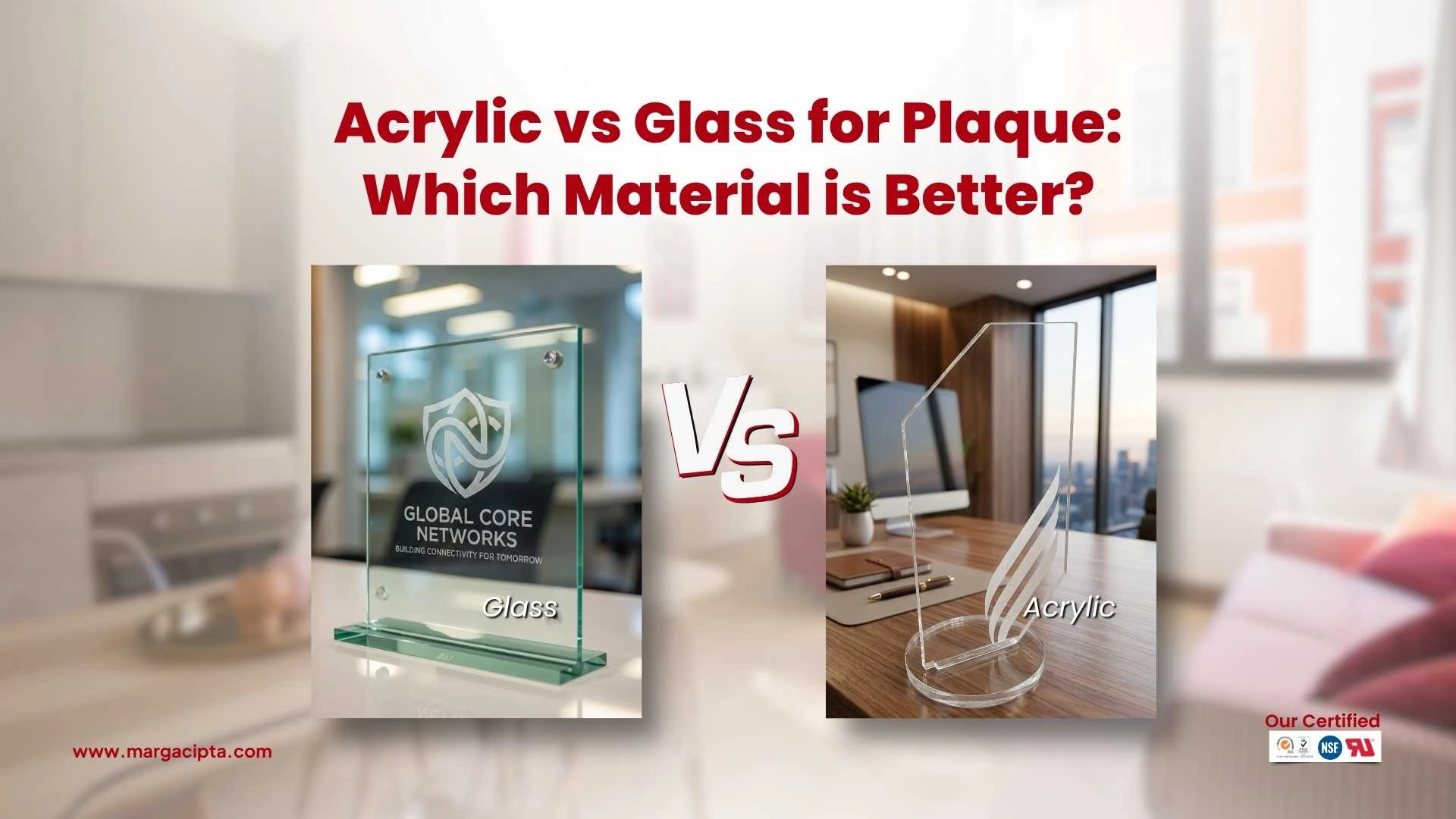
Clear Acrylic Sheet vs Glass: Pros, Cons & Key Differences

Clear acrylic sheet and glass may look similar, but they have significant differences in strength, weight, safety, and flexibility.

In general, clear acrylic sheet is lighter, more impact-resistant, and easier to fabricate, while glass is more scratch-resistant and traditionally used for windows.

Because of these advantages, acrylic sheets are widely used for signage, display cases, partitions, and architectural panels.


Key Differences Between Acrylic Sheet and Glass

Feature

Clear Acrylic Sheet

Glass

Weight

About 50% lighter

Heavier

Impact resistance

Up to 10–17× stronger

Can shatter easily

Transparency

Up to 92% light transmission

Around 90%

Fabrication

Easy to cut, bend, and shape

Difficult to modify

Safety

Shatter-resistant

Breaks into sharp pieces

Scratch resistance

Lower than glass

Higher

These properties make acrylic a popular alternative for many modern applications.

Read also: Cost Breakdown: How Acrylic Can Help You Save Budget in Long-Term Projects

Pros of Clear Acrylic Sheet

Clear acrylic sheets offer several advantages compared to glass.

1. Much More Impact Resistant

Acrylic is significantly stronger against impact, making it safer for environments where breakage is a concern.

2. Lightweight

Acrylic weighs roughly half as much as glass, making installation easier and reducing structural load.

3. Easy to Fabricate

Acrylic can be:

  • Laser cut
  • CNC machined
  • Heat bent
  • Thermoformed

This flexibility makes it ideal for custom designs.

4. Excellent Optical Clarity

High-quality acrylic can achieve up to 92% light transmission, making it one of the clearest plastic materials available.

Cons of Clear Acrylic Sheet

Despite its advantages, acrylic also has limitations.

1. More Prone to Scratches

Compared to glass, acrylic surfaces can scratch more easily.

2. Higher Thermal Expansion

Acrylic expands more when exposed to temperature changes.

3. Chemical Sensitivity

Certain solvents can damage acrylic surfaces.

When to Choose Acrylic Instead of Glass

Acrylic sheets are better when you need:

  • Lightweight panels
  • High impact resistance
  • Custom shapes or fabrication
  • Safer materials for public environments

Common applications include:

  • Retail signage
  • LED light boxes
  • Display stands
  • Protective barriers
  • Architectural panels

Read also: Acrylic for Industrial Use: From Machine Guards to Safety Barriers

FAQ: Clear Acrylic Sheet vs Glass

Is acrylic stronger than glass?

Yes. Acrylic is significantly more impact resistant than glass and less likely to shatter.

Is acrylic clearer than glass?

High-quality acrylic can transmit slightly more light than glass, making it very clear.

Does acrylic scratch easily?

Yes, acrylic is more prone to scratches compared to glass.

Can acrylic replace glass?

In many applications such as signage, displays, and partitions, acrylic can effectively replace glass.

Looking for High-Quality Clear Acrylic Sheets?

If you need a material that is lighter, safer, and easier to fabricate than glass, clear acrylic sheets are a reliable alternative for many applications such as signage, displays, partitions, and architectural panels.

PT. Margacipta Wirasentosa supplies high-quality acrylic sheets with excellent optical clarity and consistent thickness, suitable for both commercial and industrial use.

  • High transparency
  • Durable and impact resistant
  • Easy to cut, shape, and fabricate
  • Suitable for signage, displays, and protective panels

Contact our team at info@margacipta.com or explore our acrylic sheet products to find the right material for your project.

A Step-by-Step Guide on How to Cut Acrylic Sheet Safely

Acrylic sheets are widely used in industries such as signage, display manufacturing, interior design, and fabrication. Because acrylic is lightweight and easy to shape, it can be cut into various sizes and forms for different applications.

However, cutting acrylic incorrectly may lead to cracking, chipping, or rough edges. To achieve clean and professional results, it is important to follow proper cutting techniques.

This step-by-step guide explains how to cut acrylic sheet properly and safely using commonly available tools.

Step 1: Choose the Right Cutting Tool

The cutting method depends on the thickness of the acrylic sheet.

Common tools used to cut acrylic include:

  • Acrylic scoring knife for thin sheets
  • Table saw or circular saw for thicker panels
  • Laser cutting machines for precise fabrication
  • Jigsaw for curved cuts

For thin sheets under 3 mm, a scoring knife is usually sufficient. For thicker acrylic, power tools are recommended.

Read also: Acrylic Sheet for Interior Design: Modern Applications for 2026

Step 2: Mark the Cutting Line

Before cutting, measure the acrylic sheet carefully and mark the cutting line using a ruler and marker.

To improve accuracy:

  • Use a metal ruler or straight edge
  • Double-check measurements
  • Keep the protective film on the acrylic surface to prevent scratches

Precise marking helps ensure a clean and straight cut.

Step 3: Secure the Acrylic Sheet

Place the acrylic sheet on a stable work surface and secure it using clamps if necessary.

This prevents the material from moving during the cutting process and reduces the risk of uneven cuts.

If using power tools, make sure the sheet is supported evenly on both sides.

Step 4: Cut the Acrylic Slowly

When cutting acrylic, slow and steady movement is important.

For scoring knives:

  1. Score the marked line multiple times using firm pressure.
  2. Move the sheet to the edge of a table.
  3. Snap the sheet carefully along the scored line.

For saw cutting:

  • Use fine-tooth blades designed for plastics.
  • Avoid cutting too fast to prevent melting or chipping.

Read also: How to Identify High-Quality Cast Acrylic Sheets | Buyer’s Guide

Step 5: Smooth the Edges

After cutting, the acrylic edge may feel rough or sharp. To achieve a smooth finish:

  • Use fine sandpaper to polish the edge
  • Apply gradual pressure while sanding
  • Clean the surface after finishing

For professional fabrication, polishing techniques such as flame polishing or buffing may also be used.

Safety Tips When Cutting Acrylic

Always prioritize safety when working with acrylic sheets. Important safety precautions include:

  • Wear safety glasses to protect your eyes
  • Use gloves to avoid cuts from sharp edges
  • Ensure proper ventilation when using power tools
  • Keep hands away from the blade during cutting

These steps help reduce the risk of injury and improve cutting accuracy.

Conclusion

Learning how to cut acrylic sheet properly can significantly improve the quality of fabrication projects.

By using the right tools, marking accurately, cutting slowly, and smoothing the edges, you can achieve clean, professional results without damaging the material.

Whether you are working on signage, display stands, or DIY projects, proper cutting techniques will help you maximize the versatility of acrylic sheets.